What Practitioners Actually Add Next and Why the Order Matters
The UK aesthetic injectables market is worth over £400 million and is forecast to nearly double by 2030, according to Grand View Research. Botulinum toxin – anti-wrinkle treatment; holds the largest single share of that market. And demand from clients is not slowing. According to the BAAPS 2024 annual audit, Botox use by BAAPS member surgeons alone increased by 5%, while dermal fillers jumped 27% in the same year.
The practitioner market is growing to meet it. Right now, ‘botox training course’ generates 5,000 searches per month in the UK. That is not casual curiosity, that is a pipeline of practitioners actively looking for their entry point into injectables. Some will be complete beginners. Many will already be practising beauty therapists or healthcare professionals ready to expand. All of them are asking the same question: where do I start, and what comes next?
This is that answer.
Why Injectables? The Demand Reality in 2025
The UK non-surgical aesthetics industry is now valued in excess of £3 billion, with market research firm Rare Group estimating that 7.7 million people in the UK have had a non-surgical treatment in the past 12 months. More significantly, 13.9 million, almost one in five adults – are currently considering treatment. That is a conversion opportunity of enormous scale, and the practitioners serving that market are the ones training now.
Anti-wrinkle injections and dermal fillers sit at the absolute centre of non-surgical demand. Social media has accelerated awareness dramatically, clients are more informed, more specific in what they want, and more willing to pay for results. Laser hair removal was the most searched aesthetic treatment in the UK in 2025, with aesthetic procedures in general continuing to post year-on-year growth across all demographics.
The regulation landscape is also shifting. Scotland passed new legislation in March 2026 tightening requirements around who can perform Botox and filler treatments. Across the rest of the UK, licensing reform is expected to follow. This matters for training decisions made now: practitioners who complete accredited, quality-led training today are positioning themselves ahead of incoming compliance requirements, not scrambling to catch up with them.
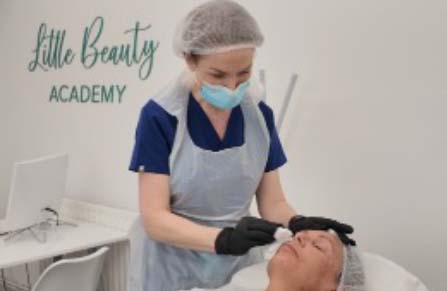
Step One: Anti-Wrinkle Injections – The Correct Starting Point
The most common mistake beginners make is trying to begin with everything. Lip filler on day one. Advanced techniques before foundational anatomy. It never ends well, and it is usually expensive to fix.
Anti-wrinkle injections (botulinum toxin) are the correct entry point for almost every practitioner for one clear reason: they work with muscle movement, not volume placement. The technique is precise and reproducible. The anatomy is learnable. Results are temporary, which means mistakes are recoverable. And the client demand for anti-wrinkle treatment is enormous.
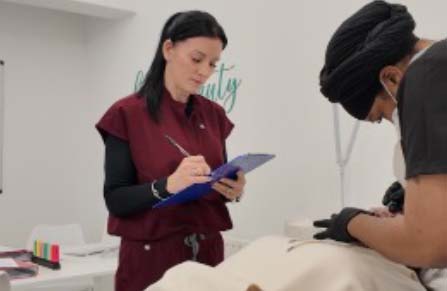
A solid foundation aesthetics course will cover:
- facial anatomy,
- consultation and consent,
- injection technique for the three primary zones (forehead, glabellar, crow’s feet),
- contraindications,
- aftercare protocols,
- and managing adverse events.
That is your clinical bedrock. Everything that follows builds from it.
Step Two: Dermal Filler – Where Practitioners Expand
Once comfortable with anti-wrinkle treatments, most practitioners add dermal filler and the search data reflects this natural progression. ‘Dermal filler training course’ generates 500 searches per month in the UK. ‘Lip filler course’ generates a further 500. These are the practitioners who have taken one step and are ready for the next.
Dermal filler is more technically demanding than anti-wrinkle. You are working with volume, structure, and tissue planes rather than muscle relaxation. Lip anatomy in particular requires careful understanding; the lip filler course remains one of the most in-demand training modules precisely because lips are both the most common client request and the highest-risk injectable site for vascular complications.
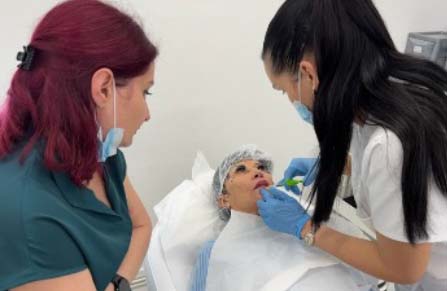
The key at this stage is not just technique, it is depth of anatomical understanding. A practitioner who can perform a lip treatment is competent. A practitioner who understands the vascular anatomy, knows the danger zones, and can manage a vascular occlusion if one occurs is safe. That distinction matters to clients, to insurers, and increasingly to regulators.
Step Three: Advanced Injectables – Where the Market Differentiates
This is where practitioners separate from the crowd. Advanced dermal filler training 500 searches per month, with medium competition – covers cheek volumisation, jawline definition, tear trough treatment, and structural facial techniques. Polynucleotides training generates another 500 monthly searches. These are the treatments clients ask for after their first few anti-wrinkle appointments, once they trust their practitioner and want to address more complex concerns.
Advanced injectables are also where pricing rises sharply. A basic anti-wrinkle appointment might be priced at £150 to £250. A full facial consultation incorporating cheeks, jawline, and multiple filler points can command £500, £800, or more. The same trained hands, the same time in clinic but a significantly higher treatment value.
Mesotherapy training (500 monthly searches) and fat dissolving injection courses (50 monthly searches) also fit at this stage. Both address body and facial concerns that complement an injectable portfolio and attract clients who want non-surgical results without dermal filler.
What to Look For in a Botox Training Course
Not all courses are equal. And in a market moving toward stricter regulation, the course you choose now will either set you up or hold you back. Here is what actually matters:
Accreditation and insurance recognition. Your course must be recognised by professional indemnity insurers. Without this, you cannot practise. Check before you book not after.
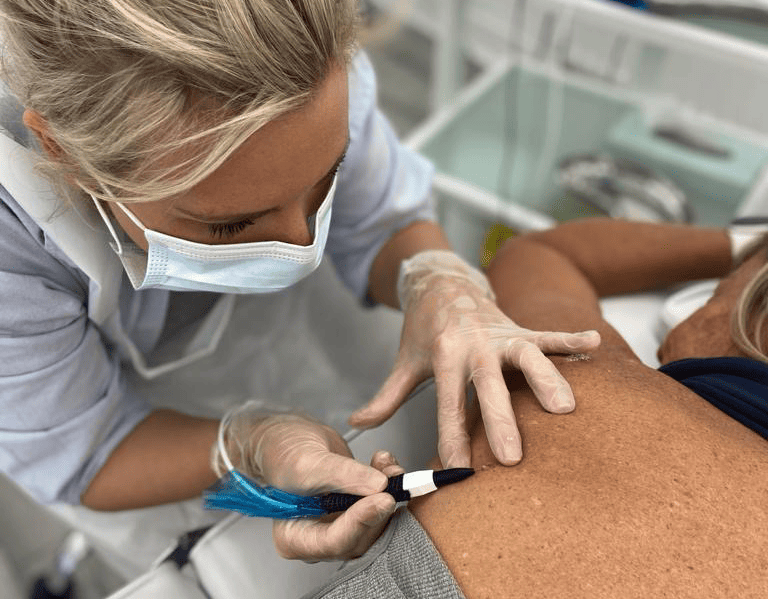
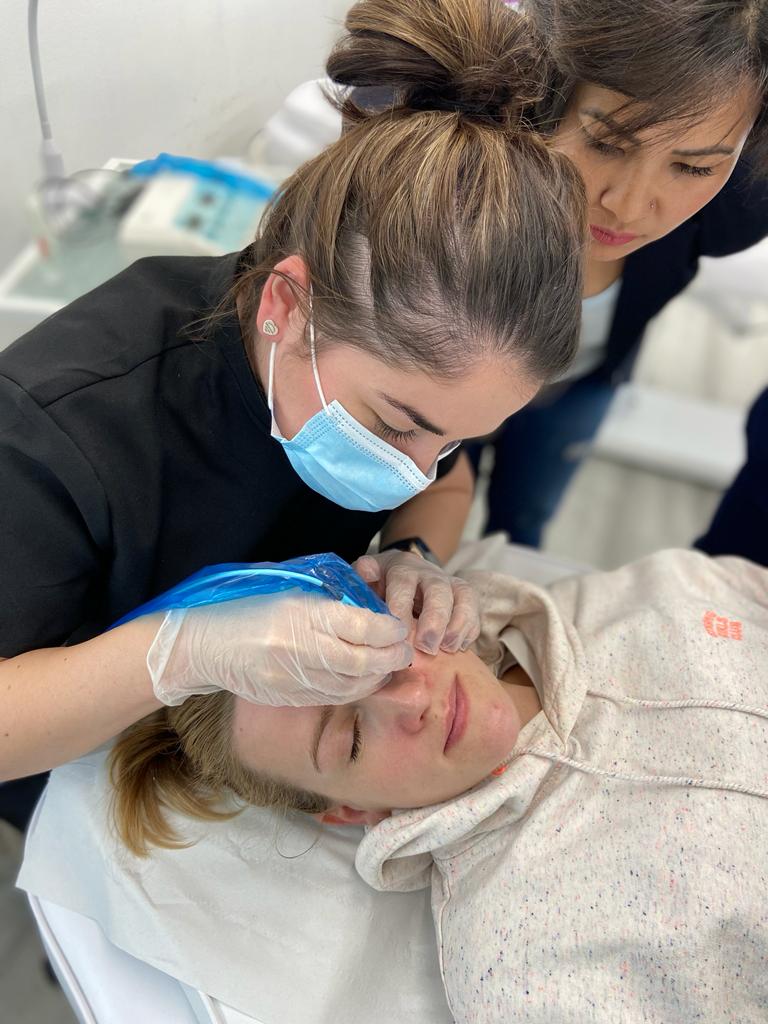
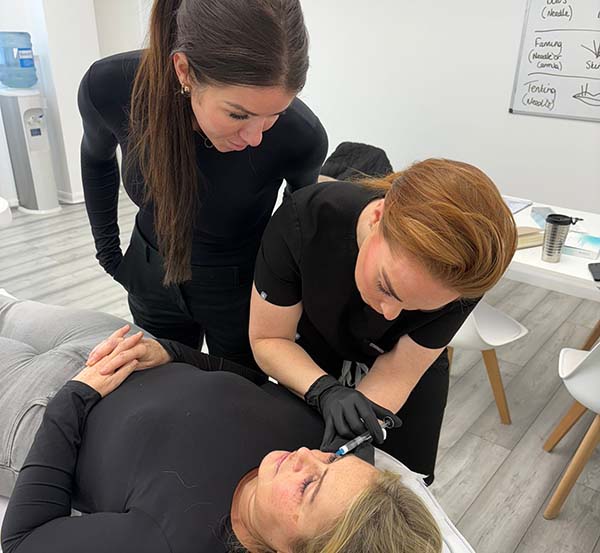
Hands-on training with real clients. Theory alone does not prepare you for an injection. If a course offers only mannequin or online practice, it is not enough. You need supervised clinical hours with live models.
Small class ratios. In a class of fifteen, how many injections do you actually perform? The best training environments are small, with high supervisor contact and genuine time on technique.
Anatomy that goes beyond the basics. Danger zones. Vascular anatomy. Adverse event recognition and management. A course that does not cover what can go wrong is a course that is not preparing you for what will occasionally go wrong.
Clear progression pathways. Your foundation course should be a doorway, not a ceiling. Look for a provider with a structured pathway from anti-wrinkle through to advanced aesthetics, so your development has a logical arc.
The Income Trajectory of a Trained Aesthetic Practitioner
Let’s be direct about this. Anti-wrinkle injections are typically priced between £150 and £300 per area. A practitioner seeing ten clients per week at an average of £200 per appointment is generating £2,000 per week from injectables alone. Add lip filler at £300 to £400 per treatment. Add a dermal filler package at £600. The numbers compound quickly.
The business model also benefits from the treatment cycle. Anti-wrinkle results last three to four months. That means every client you treat well comes back three times per year, minimum. You are not constantly acquiring new clients to sustain revenue – you are building a loyal client base that rebooking automatically.
The practitioners who build the strongest aesthetics businesses are not always the ones who trained most extensively first. They are the ones who started correctly, with proper foundations – and then built progressively, adding treatments as their clinical confidence and client demand warranted it.
How to Choose the Right Botox Training Course for Your Career
The search volume exists. The client demand exists. The market is growing, and regulation is tightening around quality. Practitioners who complete a properly accredited botox training course now are the ones who will be positioned to benefit from both the demand surge and the incoming compliance requirements, not scrambling to retrofit qualifications later.
Little Beauty Academy’s botox training and aesthetics courses are built around the progression that real practitioners follow. From anti-wrinkle foundations through to advanced injectables, each stage is designed to give you the clinical competence, anatomical understanding, and practical confidence to build a practice that lasts.
Explore our aesthetic training courses and find your starting point →
Explore our advanced aesthetic training courses →

Author: Anna Camarinha BSc
Founder and Lead Educator at Little Beauty Academy
REFERENCES:
- Statement: Injectable market worth £400m, forecast to double by 2030
- Source: Grand View Research: https://www.grandviewresearch.com/horizon/outlook/aesthetic-injectable-market/uk
- Statement: Botox use up 5%, dermal fillers up 27% among BAAPS surgeons
- Source: BAAPS Annual Audit 2024: https://baaps.org.uk/baaps_annual_audit_results_.aspx
- Statement: UK non-surgical aesthetics industry worth £3 billion+
- Source: Rare Group Research: https://www.rare.consulting/blog/how-the-uk-medical-aesthetics-market-is-evolving
- Statement: 7.7 million had treatment, 13.9 million considering it
- Source: Rare Group Research: https://www.rare.consulting/blog/how-the-uk-medical-aesthetics-market-is-evolving
- Statement: Laser hair removal most searched aesthetic treatment in UK 2025
- Source: PolicyBee UK Aesthetics Statistics: https://www.policybee.co.uk/blog/aesthetics-industry-statistics
- Statement: 5,000 monthly searches for botox training course
- Source: Google Keyword Planner – Little Beauty Academy analysis